

The Nude in Art: Vulnerability, Truth, and the Absence of Desire

Throughout the history of art, the nude has always been a form of language. It is the purest matter through which the artist tells the essence of being human, stripped of roles, eras, and social identities.

As a genre, the nude is a complex subject to approach due to its many variations: formal,
aesthetic, and iconographic. Some art historians even consider it to be one of the most important, if not the most important, in the entire history of Western art. According to the Spanish historian, essayist, and critic Francisco Calvo Serraller,
“Nudity is not merely a form of art, but the very explanation — or logic — of Western art: the dramatic point, or intersection, between the natural and the divine, between the ideal and the real, between the carnal and the spiritual — ultimately, between body and soul.”

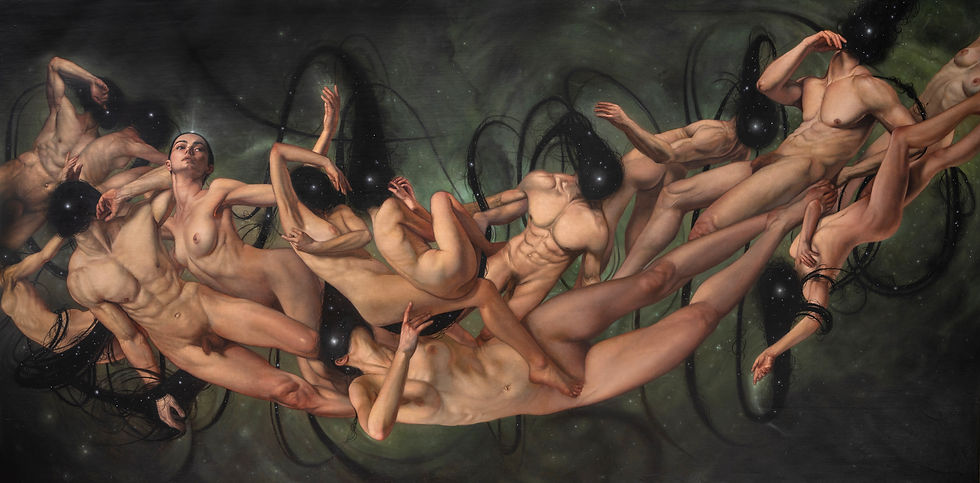
In my work, the nude is never erotic. It is not born from desire, but from the need to reveal the most fragile truth of existence. The figures I paint do not seek the viewer’s gaze: they exist in an inner space, suspended between dream and reality, as if the body were merely the shell of something vaster: a soul, a memory, an emotion.
To undress the body is, for me, an act of transparency: to remove every mask, every ornament, every distraction that distances us from essence.The nude thus becomes a symbol of vulnerability and purity, not an object of desire.
Many of my figures seem to dissolve, merging with the space around them. It reflects how I perceive the body as a fragile boundary between matter and spirit. Through the nude, I seek not the flesh, but impermanence, the awareness that everything we are, even beauty itself, is destined to change.
In this sense, art does not show bodies, it reveals presences.


Comments